How to Tell If Your Travel Itinerary Is Too Packed
There isn't a certain number of activities that makes a travel itinerary too packed.
Three activities could be too much for one day. Five could be completely reasonable for another. What feels like too much will be different for different people, and it can even be different for the same person on a different kind of trip.
A full itinerary isn't automatically a problem either. Sometimes you only have a few days somewhere. Sometimes opening hours, transportation, tours or bookings dictate the schedule. And sometimes you simply enjoy a busy trip.
So rather than asking how many activities are too many, it can be more helpful to look at what the whole day will actually ask of you.
Look beyond the number of activities
When I look at an itinerary that seems particularly full, I don't necessarily start by counting how many things are on it.
I look at what is happening around them.
Are the activities close together, or are you going to spend a surprising amount of your day getting from one to the next? Is there time for lunch, lineups, finding the entrance, buying tickets or waiting for a tour to start?
Then there is the activity itself.
A museum, a walking tour and an evening event might look like three items on a schedule. But together they could mean hours on your feet, a lot of information to take in and very little time in between.
Another day with three, four or even more activities might feel completely different if everything is close together and relatively easy.
That's why I don't think a rule like "only plan two or three activities a day" tells you very much on its own.
I learned this in Rome
On one of my trips to Rome, we packed a lot into three days.
Some of the places we wanted to see were close together, but others weren't. What we hadn't really accounted for was how big Rome was and how much time disappeared between the things on our itinerary.
There were crowds and lineups. Tickets took time. And, of course, everyone else in Rome seemed to want to see the same things we did.
Sometimes we were waiting for the people ahead of us to finish going through part of a tour. Then we still had to get across the city for whatever came next.
A few times, we ended up rushing through something because we knew we had to get to the next activity.
And it wasn't just one full day. All three days were like that, so it built up.
We saw a lot of Rome, but I don't think I fully appreciated everything we saw. There wasn't much time to sit somewhere with a coffee, watch what was happening around us and just be there. That part of the trip seemed to go incredibly fast.
Later trips taught me how much I enjoy that time. Sitting somewhere for a while isn't necessarily taking time away from the trip. Sometimes it is part of experiencing where you are.
Now, even when I have a fairly structured itinerary, I am much more likely to make room for downtime too.
And sometimes, giving myself that time to recharge means I actually have the energy to do more later.
Remember that the itinerary doesn't show everything
Our arrival in Rome was another example.
We thought we might be able to do some sightseeing after we arrived. But our flights were a little delayed, and when we got there, the taxi couldn't take us directly to the hotel.
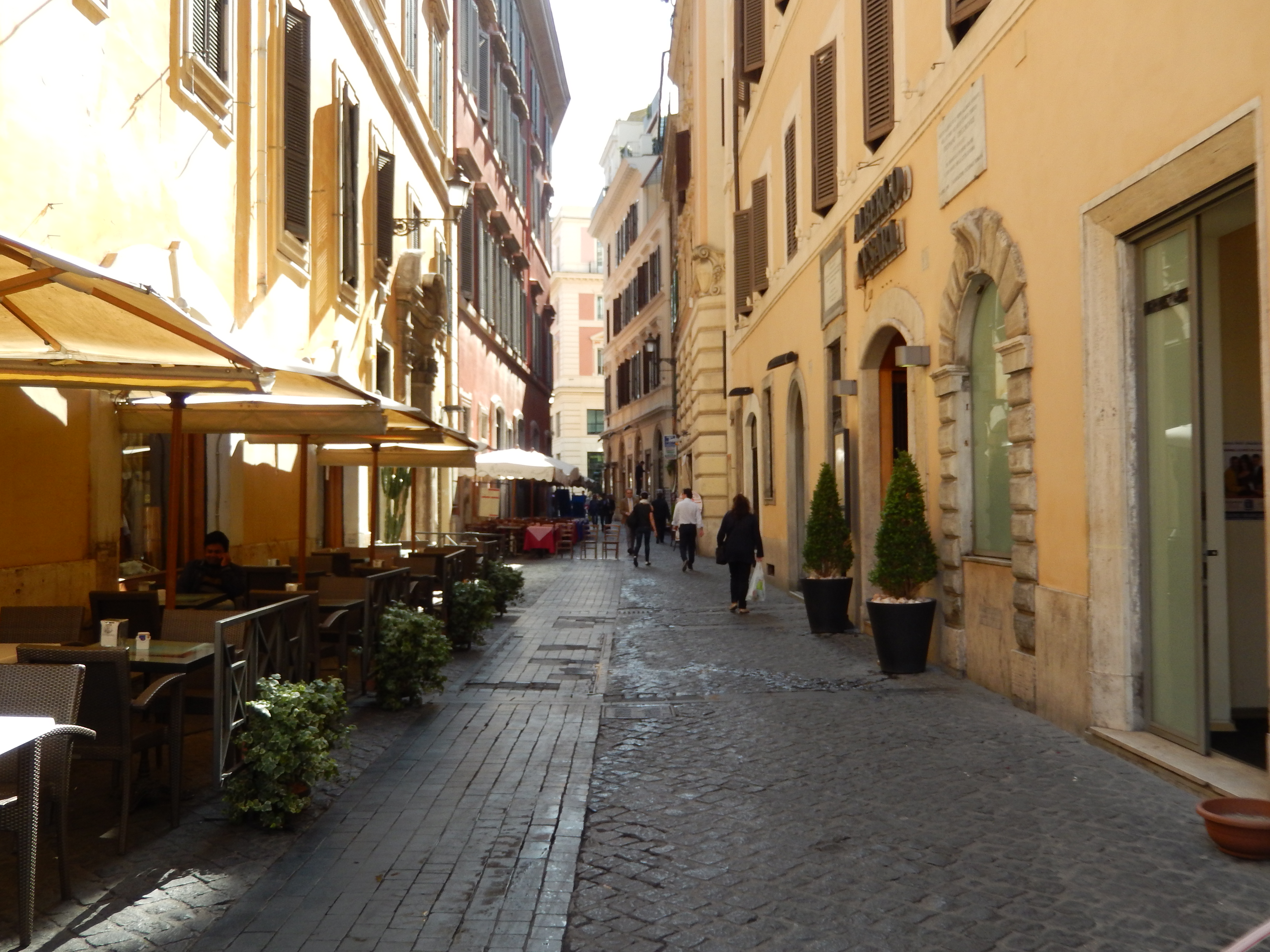
I loved that the hotel was tucked down a street too narrow for the taxi. Dragging our suitcases over the cobblestones to get there was part of the experience. It just wasn't something we had factored into the energy or time we would have left afterwards.
Thankfully, the hotel could hold our luggage because our room wasn't ready yet. But by the time we had arrived, dealt with our luggage and got ourselves sorted out, we didn't have much time or energy left for the sightseeing we had imagined doing.
Getting there simply took more time and energy than we had expected.
That is worth remembering when you look at your own itinerary.
"Arrive in Rome" can look like one simple line on a schedule. The actual experience of arriving can include delays, transportation, walking, luggage, check-in and figuring out where you are.
The same is true throughout a trip. The activity listed on the itinerary is only part of the day.
Think about energy as well as time
It is easy to look at a schedule and think, technically, the math works.
But having enough hours doesn't always mean you will have enough energy.
Will you have just arrived after a long flight? Are you changing hotels or destinations? Have you already spent several days doing a lot of walking?
And what do the activities themselves require?
Several hours on your feet and several hours in a museum are demanding in different ways. A guided tour can be fascinating while also giving you a lot of information to absorb. Navigating unfamiliar transportation may take more concentration than the same amount of travel would at home.
That doesn't make any of those activities a poor choice. It just means they ask something of you too, and that is worth taking into account when you look at the whole day.
Don't judge one busy day on its own
A single very full day might suit you perfectly. You might love it.
Or it might not suit you at all, but still be unavoidable because of the way the day has to work.
What matters then is what surrounds it.
If you have an early start, a long excursion and a late return, what does the next morning look like? If several days involve a lot of walking, crowds, transportation or concentration, is there somewhere in the trip where the pace changes?
This doesn't mean every busy day needs to be followed by an empty one.
A packed day may feel completely different when it is followed by a slower morning than when it is the third packed day in a row.
That was part of what happened to us in Rome. It wasn't only that individual days were busy. They were all busy, one after another.
Pay attention to how the itinerary feels when you look at it
There is another question that has nothing to do with kilometres, hours or the number of reservations.
When you look at your itinerary, does it make you excited?
Or do you already feel a little stressed about keeping up with it?
That doesn't necessarily mean something needs to come off the schedule. A busy itinerary may be exactly what you want, or it may simply be what this particular trip requires.
But the feeling is still worth paying attention to.
Sometimes what needs attention isn't an individual activity. It is the fact that there isn't much room around any of them.
Planning a lot isn't the same as packing too much in
I also don't think "don't overplan" is a particularly useful answer.
Some people love planning. Researching and organizing a trip can be part of the enjoyment. Having the details worked out can also make it easier to relax once you arrive because you know the things you care about have been taken care of.
Someone can plan a trip in tremendous detail and still include downtime, flexibility and room to breathe.
Structure is not the same thing as an overpacked itinerary.
The same goes for spontaneity.
You don't have to leave entire days blank if that doesn't suit the way you like to travel. You might simply protect an hour, an afternoon or another stretch of time because you don't know yet what you will want to do with it.
You can plan the space without planning what happens in it.
What if your itinerary is already set?
Sometimes the itinerary is the itinerary.
You have tickets, reservations or a limited amount of time, and you aren't going to rebuild the whole trip.
Instead, look for smaller opportunities to make the day easier on yourself.
Could you group nearby activities together so you aren't spending as much time getting back and forth?
Would sitting down for a while between two activities give you a chance to recharge?
Could the next morning start a little later?
Would spending a bit more on a taxi or ride-share instead of public transit save time or energy on a particularly demanding day?
Sometimes a small change around the schedule can make a bigger difference than removing something from it.
So, is your itinerary too packed?
There isn't a universal answer to how packed is too packed. But that doesn't mean you can't figure out what is too packed for you, on this trip.
Instead of starting with a rule about how many activities you should have, look at the whole day and what it will actually ask of you.
Think about the time and effort required to get between places. Consider the energy the activities themselves will take. Look at what comes before and after the day. Notice whether there is anywhere to pause, eat, recharge, absorb what you have just experienced or stay somewhere a little longer because you are enjoying it.
And pay attention to your own reaction when you look at the schedule.
You may decide your itinerary is exactly as full as you want or need it to be.
Or you may spot one or two places where a little breathing room could make the trip feel very different.
Want to see what else your itinerary might not be showing you?
My free guide, What Your Itinerary Isn't Showing You, helps you look beyond the list of activities and notice some of what happens around and between the plans.
It isn't about telling you there is one right way to travel. It is about helping you get a clearer picture of the trip you are actually taking before you decide whether anything needs your attention.
About Kristi
I’m Kristi, founder of The Confident Explorer. I created it to help travellers notice the small choices that can make a trip better, and to offer suggestions they can adapt to what works for them. Whether you already travel confidently or you’re not yet sure travel is something you can do, I want to help you feel more prepared before you go, have ways to respond when plans change or the day turns out differently once you’re there, and learn what works for you for future trips.